|
We are here to help with any questions you have! Call anytime: 773-741-9890 | Email: [email protected] | Chat Now |
|
Inverters and Inverter Chargers
Inverters
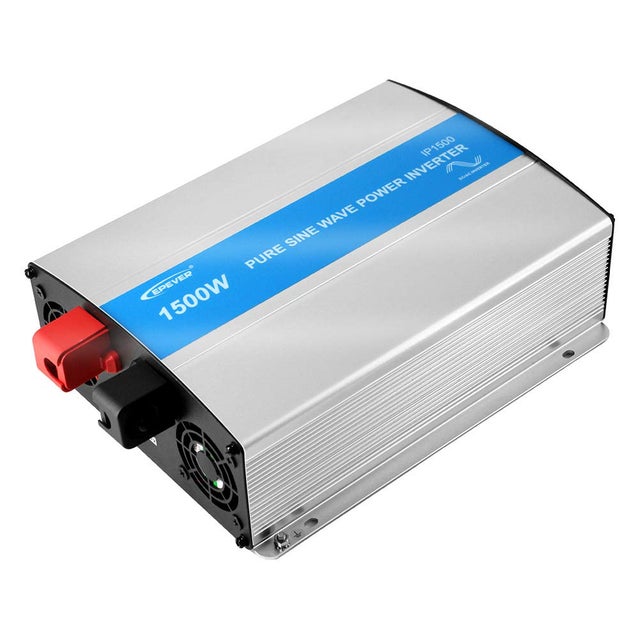
Inverters are devices designed to convert DC battery power into AC power, enabling the operation of AC appliances like coffee makers and microwaves. They draw power from a battery bank and supply it to these appliances. Available in various sizes, inverter capacities are typically measured in watts, with common capacities ranging from 1,500 watts to 3,000 watts.
Most inverters operate at an efficiency of 80-90%, meaning they convert 80-90% of the battery power into AC power. There are two main types of inverters: pure sine wave and modified sine wave.
Inverter Chargers
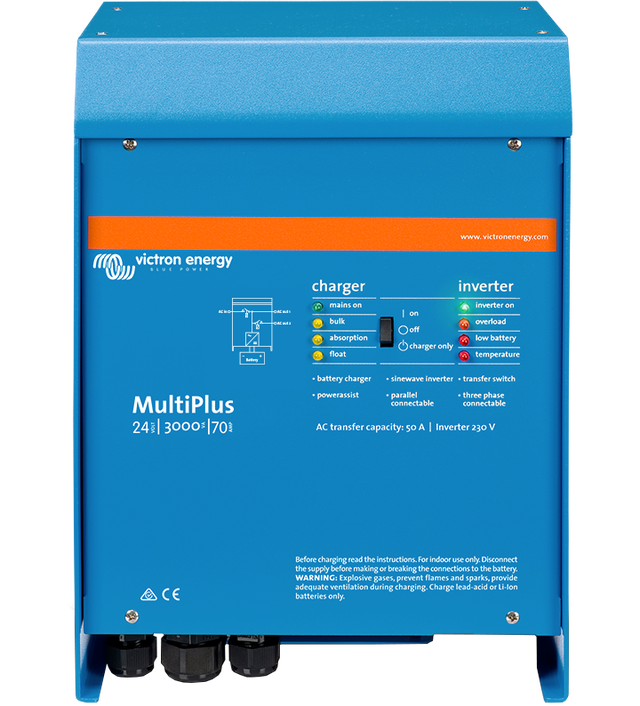
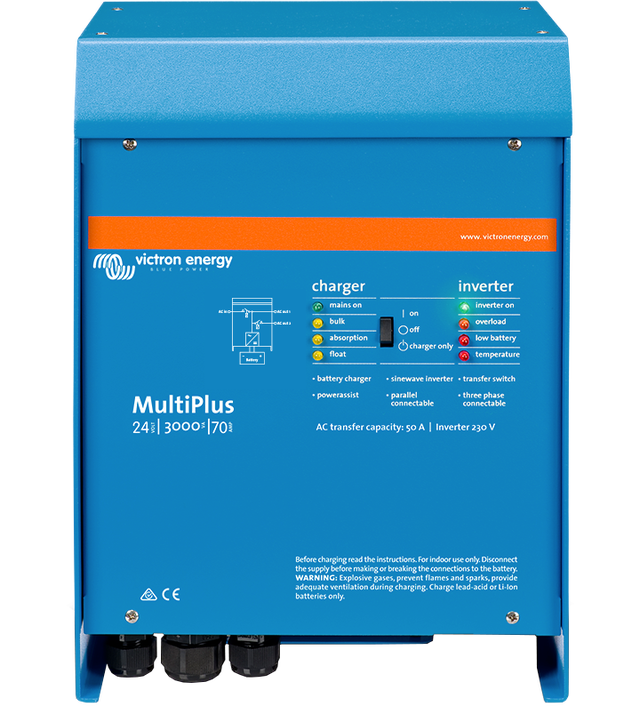
Inverter/chargers serve a dual purpose: they supply AC power to appliances from a battery bank and charge the battery bank using grid power or a generator. Essentially, they convert DC to AC to power appliances and AC to DC to charge the battery bank.
Most inverter/chargers include an automatic transfer switch (ATS). When grid or generator power is available, the ATS bypasses the inverter, delivering AC power directly to the appliances and connecting to the built-in battery charger to recharge the battery bank. If the grid or generator power is disconnected, the ATS automatically switches to use the battery bank to power the appliances.
Inverters are devices designed to convert DC battery power into AC power, enabling the operation of AC appliances like coffee makers and microwaves. They draw power from a battery bank and supply it to these appliances. Available in various sizes, inverter capacities are typically measured in watts, with common capacities ranging from 1,500 watts to 3,000 watts.
Most inverters operate at an efficiency of 80-90%, meaning they convert 80-90% of the battery power into AC power. There are two main types of inverters: pure sine wave and modified sine wave.
- Pure sine wave inverters produce a smooth sine wave output, closely resembling the power from the grid, and are ideal for sensitive electronics and appliances.
- Modified sine wave inverters generate a square wave output, which is less smooth and less expensive, but may not be suitable for all appliances, especially sensitive electronics.
Inverter Chargers
Inverter/chargers serve a dual purpose: they supply AC power to appliances from a battery bank and charge the battery bank using grid power or a generator. Essentially, they convert DC to AC to power appliances and AC to DC to charge the battery bank.
Most inverter/chargers include an automatic transfer switch (ATS). When grid or generator power is available, the ATS bypasses the inverter, delivering AC power directly to the appliances and connecting to the built-in battery charger to recharge the battery bank. If the grid or generator power is disconnected, the ATS automatically switches to use the battery bank to power the appliances.